Selling an Inherited House in Connecticut: What Probate Requires
By Matt Caiola
Most people who inherit a house in Fairfield County have never been through probate, and they find out how it works at the worst possible time. Someone has died, there is a house holding forty years of belongings, and a sibling in another state is already asking what the timeline looks like. Connecticut's process is more structured than you might expect, and the delay usually comes from steps that could have been started earlier than they typically are.
The First Thirty Days
Connecticut puts a deadline on the very first step. Under Connecticut General Statutes section 45a-282, anyone holding the will has to deliver it, either to the person named as executor or directly to the Probate Court with jurisdiction, within thirty days of learning that the person has died. The statute carries a fine of up to $1,000 or up to a year in prison, which tells you how seriously the state treats that piece of paper.
Delivering the will is not the same as opening the estate, though in practice the two usually happen together. The court then appoints the fiduciary, meaning the executor named in the will or an administrator if there is no will, and that appointment is what creates the legal authority to act. Until it happens, nobody can sign anything on behalf of the estate.
The decree making that appointment also sets a date by which the estate is expected to be administered, usually one year from the date of death, and an inventory of assets is generally due within two months of the appointment.
Whether You Need the Court's Permission to Sell
This question moves the timeline more than any other, and the answer is sitting in the will.
If the will specifically gives the fiduciary the power to sell real estate, the estate can list and sell much the way any other seller would. If it does not, or if there is no will at all, the fiduciary has to get the Probate Court's permission before conveying the property. That involves publishing notice in a local newspaper and sending notice to all of the heirs, which can run up to two months before offers are even considered, followed by a hearing for approval that typically lands within about forty-five days.
So two estates that look identical from the outside can be very different timelines, entirely because of language in a document written years earlier. If you are the executor and you have not looked at the will on this specific point, that is the first thing to raise with the estate's attorney.
What the Estate Does Not Have to Give a Buyer
Connecticut requires most sellers of one to four family residential property to hand buyers a Residential Property Condition Report before any contract is signed, and a seller who fails to provide it owes the buyer a $500 credit at closing under section 20-327c.
Estates are exempt. Sales made by an executor, administrator, conservator, or trustee in the administration of an estate or trust do not require the report, and no $500 credit is owed for its absence.
That cuts both ways. If you are selling, it removes an obligation you probably could not have met honestly, since you likely never lived in the house and have no idea when the roof was done. If you are buying one of these, the usual paper trail is simply not there, and your inspection is carrying even more weight than it normally does.
What the House Is Probably Worth
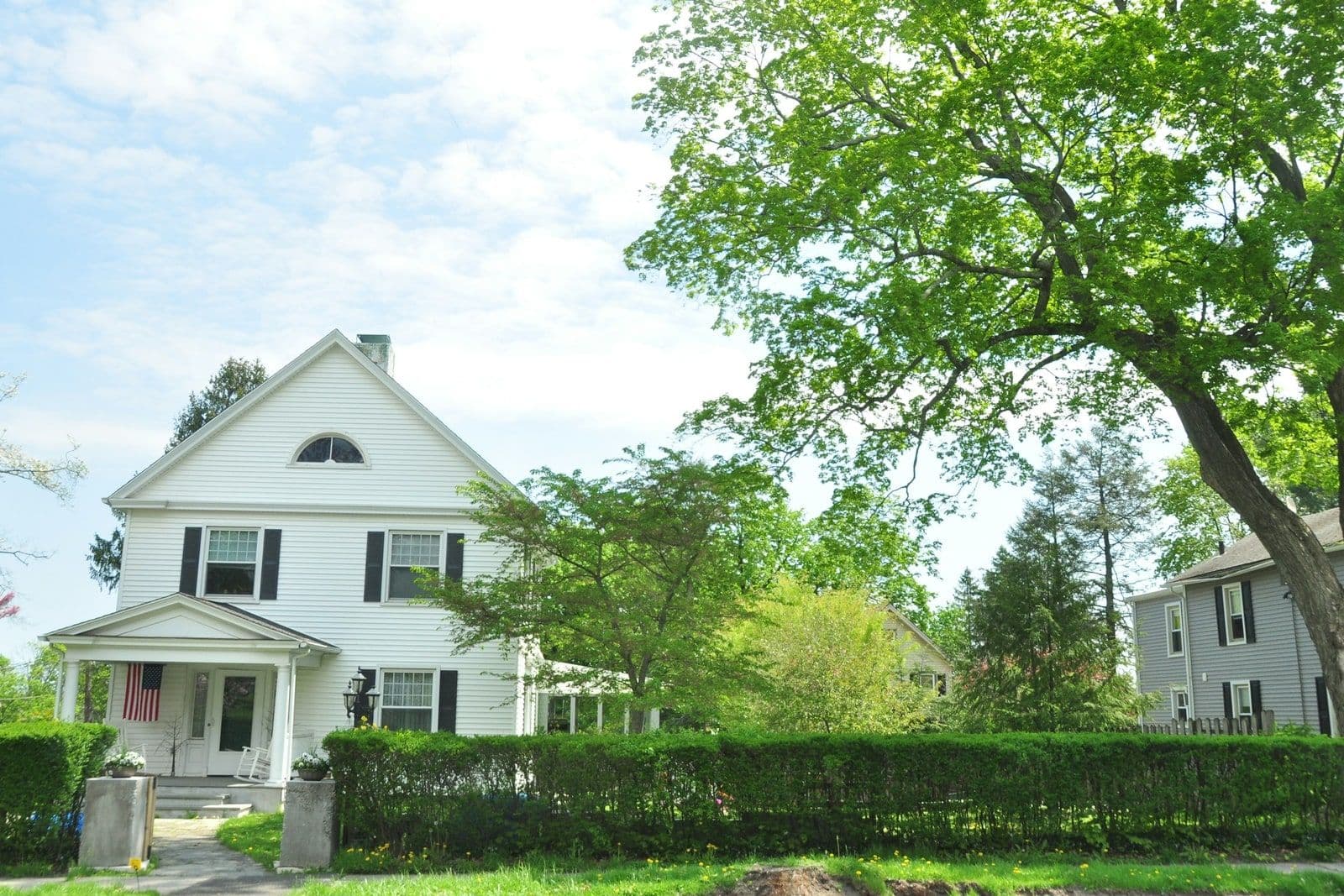
Inherited homes here are usually the older stock, and there is a common assumption that a dated house is a hard sell. The numbers do not really support that.
Across the nine Fairfield County towns I cover, 2,040 single-family homes built before 1970 sold over the last twelve months, which is 68% of total single-family sales for the period. The median home sold was built in 1951, sold for $1,100,000, and closed in 17 days at 103.5% of its original asking price. Homes built in 1970 or later sold at a higher median of $1,943,500 and closed right at asking.
Some of that gap is price point rather than age, since the lower bands have been running hotter all year. Still, the older house is what most of the market is actually buying, and these homes are not sitting because of their age.
What Probate Costs
Connecticut charges a probate court fee calculated on the gross estate, which includes assets that never pass through probate at all. The fee is graduated under section 45a-107 and capped at $40,000 for anyone who died on or after July 1, 2016. For a sense of scale, a $500,000 estate pays roughly $1,865 and a $1,000,000 estate pays roughly $3,115.
One thing worth knowing early: Connecticut's small estate procedure, the affidavit on Form PC-212, applies only to estates of $40,000 or less made up entirely of personal property. If there is a house, that shortcut is off the table and you are going through the full process.
When to Bring in an Agent
The most common mistake is treating the house as something to deal with after the estate is settled. The two do not have to run in sequence. While the court process is moving, someone can be clearing the property out, getting an honest read on what it would sell for, and finding out whether it needs maintenance or updates before it goes on the market. Sorting through thirty years of belongings takes longer than anyone plans for, and none of that work requires the court's permission.
If you are handling an estate this Fall and there is a house involved, I'd be happy to have a conversation about what it would likely sell for today and what the process looks like from here. Your attorney handles the court side and nothing here replaces their advice, but the property side can start moving well before the legal side finishes!
Probate procedure described here follows the Connecticut Probate Courts' user guide for the administration of decedents' estates and the General Statutes sections cited. It is general information about how the process works, not legal advice for any particular estate. Sale figures are from SmartMLS single-family closings across Greenwich, Stamford, Darien, New Canaan, Westport, Fairfield, Norwalk, Wilton and Ridgefield, September 2025 through August 2026. Greenwich figures are from SmartMLS only and exclude Greenwich MLS listings.