
Connecticut's Gold Coast
Wilton
Wilton occupies 27 square miles of protected Fairfield County landscape where one-to-two-acre zoning minimums, a top-five Connecticut high school, and the Norwalk River corridor define a residential town built around land preservation and academic excellence. Route 7, the town's commercial spine, carries commuters south toward Norwalk and I-95, while the Cannondale Metro-North station on the Danbury Branch connects the town directly to Grand Central Terminal.
About Wilton
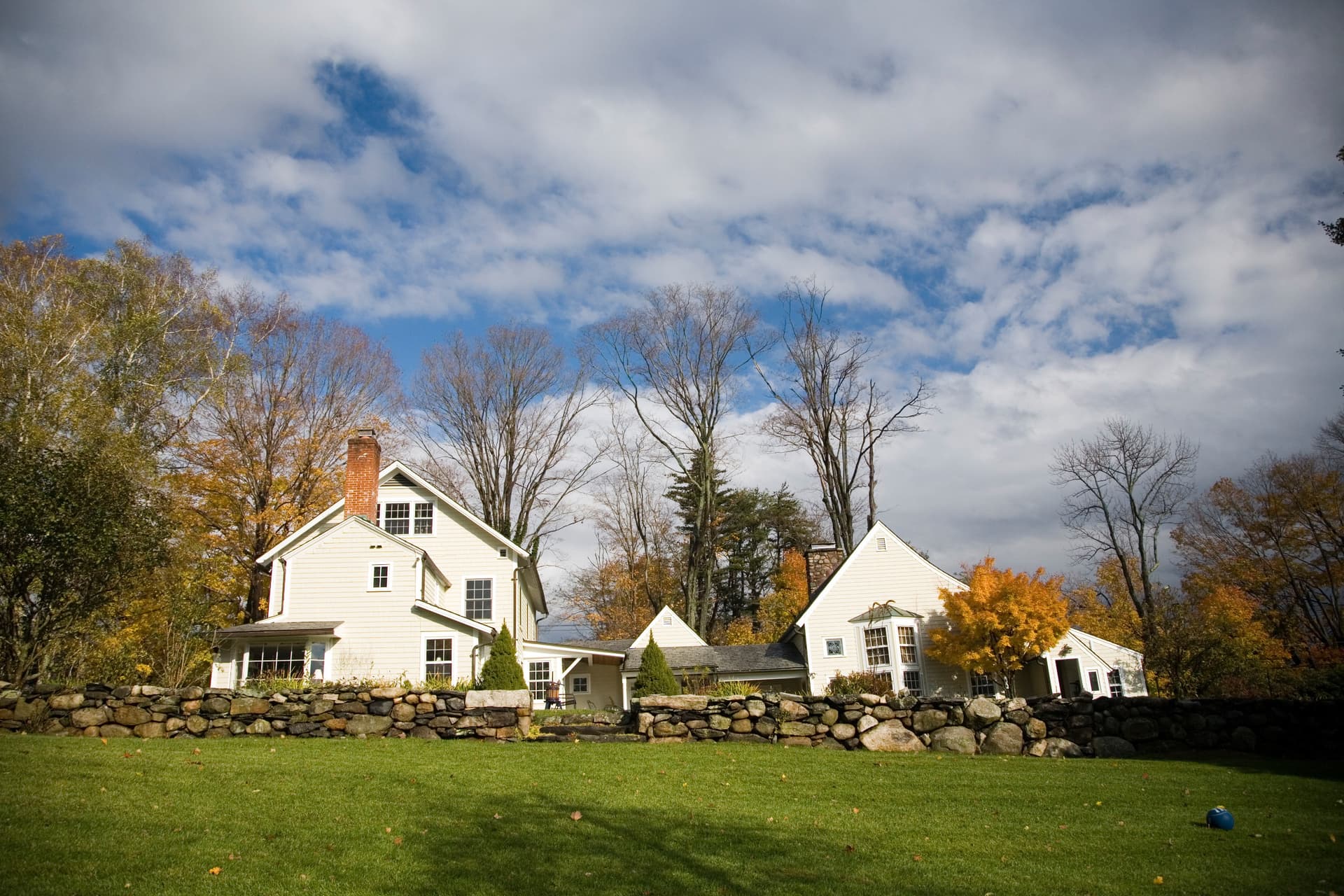
Wilton sits between Ridgefield to the north, New Canaan to the east, Norwalk to the south, and Weston to the west. Its 27 square miles are overwhelmingly residential, governed by zoning that mandates one-to-two-acre lot minimums across most of the town. The Norwalk River threads through the center from north to south, passing through Cannondale Village before continuing toward the Long Island Sound. This is not a town of dense commercial districts or walkable retail corridors; it is a place where stone walls, mature hardwood canopy, and setbacks measured in hundreds of feet set the prevailing character.
Route 7 - Danbury Road - is the primary north-south artery, carrying both local traffic and the commercial corridor that includes Merrill Business Park, a cluster of corporate tenants that provides a local employment base separate from the New York commute. The Cannondale Metro-North station, the town's only rail stop on the Danbury Branch, offers diesel push-pull service south to South Norwalk, where riders transfer to the electrified New Haven Line for a total trip to Grand Central Terminal of roughly 90 minutes. Some peak-hour trains run through to Manhattan without a transfer, compressing the commute for riders who time their schedules accordingly.
Schools are the gravity that pulls families in. Wilton High School ranks fifth in Connecticut according to U.S. News & World Report, with 79% math proficiency and 88% reading proficiency - both more than double the state averages. The district operates four elementary schools, one middle school, and one high school, all funded by a tax base with a median household income exceeding $227,000. Cider Mill School, Miller-Driscoll School, and Middlebrook Middle School feed into Wilton High, and the system's performance metrics have consistently placed it among the strongest in the state for decades.
Wilton's cultural landmarks include the architecturally recognized Wilton Library, expanded by TSKP Studio in a modernist design that won both the Connecticut Library Association's Excellence in Public Library Architecture Award and the Chicago Athenaeum American Architecture Award. Woodcock Nature Center, on 150 acres along Deer Run Road, connects residents to the town's preserved landscape through hiking trails, boardwalks over wetlands, and year-round environmental education programs. On the town's northern edge, Weir Farm National Historical Park - the only National Park Service site in Connecticut dedicated to American painting - preserves the 60-acre property where Julian Alden Weir pioneered American Impressionism.
Dining in Wilton is local rather than destination-driven, but certain establishments anchor the social landscape. Orem's Diner, operating on Danbury Road since 1921, has outlasted the Great Depression, the 1955 Norwalk River flood, and a 2003 relocation - its history is so embedded in the town that Babe Ruth once played on the baseball field behind the original location. Little Pub on Old Ridgefield Road serves a loyal following with its pub menu and craft beer list. The town's identity sits comfortably at the intersection of these institutions: long-tenured, understated, and grounded in the land and the schools that define daily life here.

Buying or selling in Wilton?
Have a question or thinking about a move? I'm here to help, whenever you're ready.
City Living in Wilton
Morning routines in Wilton typically begin with a drive along Route 7 or Ridgefield Road, depending on which direction employment or errands call. The Cannondale Metro-North station handles the commuter traffic for residents bound for Manhattan; the 90-minute door-to-door transit time, including the transfer at South Norwalk, is a known trade-off that buyers weigh against the town's larger lots and lower density compared to communities closer to the mainline. Families who work in Stamford or Norwalk benefit from a 20-to-25-minute drive south on Route 7 without touching I-95. Weekend rhythms track the seasons. Woodcock Nature Center hosts guided hikes, summer camps, and on-site animal encounters across 150 acres of trails and wetland boardwalks. Weir Farm National Historical Park opens its studios and grounds for plein-air painting, guided tours of the Weir House, and walks to Weir Pond. The Wilton Town Green serves as the staging area for seasonal events - the farmer's market, summer concert series, and holiday gatherings that draw from across neighborhoods. The Wilton Historical Society on Danbury Road preserves collections in its campus of historic buildings, offering programming that connects newer residents to the town's 18th-century agricultural origins. Dining options center on reliability and tenure. Orem's Diner on Danbury Road has served breakfast and lunch since 1921 - the Papanikolaou family now operates it in its second generation of ownership. Little Pub on Old Ridgefield Road draws a consistent crowd for pub fare and craft beer. For broader culinary variety, residents drive 15 minutes to South Norwalk's restaurant row or 20 minutes to Ridgefield's Main Street, both of which extend Wilton's effective dining radius without requiring a long trip.
Real Estate in Wilton
Wilton's market is defined by land, with zoning that keeps lots generous and pricing that follows acreage, condition, and proximity to the train. The broader market spans from the mid-$700,000s in Cannondale and Georgetown to above $2.5 million in North Wilton's estate parcels. The inventory dynamic mirrors the broader Fairfield County pattern: homeowners who locked sub-4% mortgage rates between 2020 and 2022 are holding, keeping turnover suppressed and placing upward pressure on prices for the listings that do surface. Well-maintained colonials in the Wilton Center and Silvermine neighborhoods, particularly those within the Wilton High School feeder system, move quickly when priced accurately. Colonial architecture dominates the housing stock, consistent with the town's 18th-century New England origins. Buyers will find antique capes, center-hall colonials, and mid-century ranches alongside newer custom builds on two-to-four-acre lots in the northern sections. The one-to-two-acre zoning minimum ensures consistent lot sizes and limits the density that would alter the town's open character. Buyers seeking properties with horse-ready acreage or studio outbuildings concentrate their searches in North Wilton and the Nod Hill Road corridor, where parcels of four acres or more are available.
Residential sales in Wilton over the past 12 months show a median closed price of about $1.35 million, and homes are typically spending about 43 days on the market as of September 2026.
Market Snapshot
Wilton Market Snapshot
Residential real estate trends for Wilton, Connecticut.
Active Listings
31
24 under contract
Median List Price
$1.57M
31 active listings
Median Closed Price
$1.34M
234 sales
Median Days on Market
43
31 active listings
Median $ / Sq Ft
$430
31 active listings
Sale-to-List Ratio
105.4%
234 sales
Based on 31 active listings and 234 closed sales (trailing 12 months). Source: SmartMLS · As of September 10, 2026.
+16.7%
Pricing Posture
current asking median vs trailing 12-month closed median in Wilton
234
Sales Activity
closed sales in Wilton over the trailing 12 months (-2.1% vs prior 12 mo)
3,758 sq ft
Typical Home Size
median size across the Wilton active sample
Why Buyers Choose Wilton
- •Wilton High School ranks fifth in Connecticut per U.S. News & World Report, with 79% math and 88% reading proficiency - both exceeding double the state average
- •Weir Farm National Historical Park, the only NPS site in Connecticut dedicated to American painting, preserves Julian Alden Weir's 60-acre Impressionist landscape
- •Cannondale Metro-North station on the Danbury Branch provides rail service to Grand Central Terminal via South Norwalk transfer
- •One-to-two-acre zoning minimums across most of the town protect the low-density residential character and mature tree canopy
- •Woodcock Nature Center spans 150 acres of trails and wetland boardwalks on Deer Run Road with year-round environmental education
- •Orem's Diner has operated on Danbury Road since 1921, surviving the Great Depression, a 1955 flood, and a 2003 relocation
- •Median household income exceeds $227,000, supporting a school system that consistently ranks among Connecticut's top five
Neighborhoods
Cannondale
Cannondale is southern Wilton's railroad village, organized around the Metro-North station that has shaped the neighborhood since the mid-19th century. The Cannondale Historic District, listed on the National Register of Historic Places, preserves a cluster of antique structures along Cannon Road - including the Cannondale Congregational Church, built in 1826 - that predates the rail connection by decades. The Norwalk River passes through the neighborhood, and Route 7 sits less than a mile west, placing Cannondale at the intersection of Wilton's transit, commercial, and natural corridors.
Georgetown
Georgetown occupies Wilton's southwestern corner, where Georgetown Road connects a former industrial village to the rural residential landscape that now defines it. The Gilbert & Bennett Wire Manufacturing Company operated here from 1818 until its closure in 2001, and the Georgetown Historic District preserves the architectural legacy of that 183-year industrial tenure. Today, Georgetown straddles the Wilton-Redding border with additional territory in Weston, giving it a shared identity that spans three towns while placing its Wilton-side residents firmly within the top-ranked Wilton school district.
North Wilton
North Wilton is the town's most expansive residential section, where two-to-four-acre parcels, horse properties, and custom-built estates occupy the rolling terrain between Ridgefield Road and the New Canaan border. Nod Hill Road - one of Fairfield County's most recognized residential corridors - threads through the neighborhood past stone walls, preserved farmland, and the entrance to Weir Farm National Historical Park, the only National Park Service site in Connecticut. Properties here start near $900,000 and extend above $2.5 million for estate-scale parcels with barns, paddocks, and panoramic hilltop settings.
Silvermine
Silvermine straddles eastern Wilton, Norwalk, and New Canaan along the Silvermine Road corridor, where winding roads, heavy tree cover, and the century-old Silvermine Arts Center create a neighborhood with an artistic identity unique in Fairfield County. The name derives from colonial-era legends of a silver mine - never found - but the creative community that took root here in 1906 when sculptor Solon Borglum built his hillside studio has proved more enduring than any mineral deposit. Properties range from antique homes and artist studios to custom builds on wooded one-to-two-acre lots, with pricing between $800,000 and $2 million.
Wilton Center
Wilton Center is the town's civic and commercial hub, organized around the intersection of Route 7 and Old Ridgefield Road where the Wilton Town Green, Wilton Library, and Wilton Congregational Church establish the institutional core. The architecturally awarded Wilton Library - expanded by TSKP Studio in a modernist design recognized by both the Connecticut Library Association and the Chicago Athenaeum - anchors the cultural life of the neighborhood. Village shops along Old Ridgefield Road, the Wilton Historical Society campus, and walkable connections between Town Hall, the library, and the Green create the closest approximation to a traditional downtown that Wilton offers.
Homes for Sale in Wilton
0 listings available
Listing information is supplied by SmartMLS, Inc.and other licensed IDX sources for consumers' personal, non-commercial use. Data is deemed reliable but is not guaranteed and should be independently verified.
© 2026 Smart MLS, Inc. All rights reserved.
Overview for Wilton, CT
18,503 people live in Wilton, where the median age is 43.1 and the average individual income is $98,750. Data provided by the U.S. Census Bureau.
18,503 people call Wilton home. The population density is 688 and the largest age group is between 25 and 64 years old. Data provided by the U.S. Census Bureau.
Population by Age Group
Gender Distribution
Frequently Asked Questions About Wilton
Explore Similar Towns
Discover other communities in Fairfield County that match your lifestyle.
Work With Matt
Let's Find Your Perfect Home
I'm not just helping you find a property - I'm helping you find the place where you'll build your life. Whether you're buying, selling, or just starting to explore, I'd love to be part of the journey.
Contact Matt
Wilton
New listings in Wilton
Be first to see new homes in Wilton the day they list.
No spam, unsubscribe anytime.